 By Leo Eric
For decades, traditional education models have relied heavily on direct instruction, textbook readings, and standardized testing. While this structural approach effective communicates foundational facts, it frequently fails to prepare students for the realities of the modern workplace. Employers consistently report a significant mismatch between academic qualifications and practical job readiness. Entering the professional sphere requires far more than memorizing formulas or repeating definitions; it demands the ability to navigate ambiguity, analyze complex data, collaborate across disciplines, and solve unscripted problems.
Project-Based Learning (PBL) has emerged as a transformative pedagogical framework that bridges this gap. Rather than treating knowledge as a static collection of facts to be tested on paper, PBL positions learning as an active, continuous investigation. Students acquire content knowledge and technical proficiency by working over an extended period to investigate and respond to authentic, complex, and engaging questions or challenges. By shifting the classroom dynamic from passive absorption to active execution, Project-Based Learning aligns academic instruction directly with the multi-faceted demands of the modern economy.
Bridging Abstract Concepts and Practical Application
One of the primary shortcomings of traditional instruction is the isolation of academic subjects. Students often learn mathematics, science, language arts, and history in separate silos, rarely understanding how these disciplines intersect outside the classroom wall. Project-Based Learning dismantles these artificial barriers by embedding learning within meaningful, real-world contexts.
Contextualizing Academic Content
Abstract theoretical concepts become memorable when applied to concrete challenges. For example, learning geometry through textbook exercises often yields low engagement and rapid forgetting. However, when students are tasked with designing an energy-efficient affordable housing prototype, geometric formulas instantly become essential tools for structural integrity, material estimation, and cost analysis. When students recognize why a concept matters and how professionals utilize it, information retention increases exponentially.
Developing Multidisciplinary Perspectives
Real-world problems rarely fit neatly into a single academic discipline. Addressing an environmental issue like urban water pollution requires an understanding of chemistry, geography, public policy, technical writing, and economics. In a well-structured PBL unit, learners must integrate skills across multiple fields to deliver a viable solution. This multidisciplinary approach conditions students to synthesize diverse information sources, mirroring the cross-functional project environments typical of modern corporations, non-profit organizations, and research institutions.
Cultivating Essential Workplace Soft Skills
While hard technical skills are necessary for entering specific career fields, soft skills determine long-term professional mobility and leadership potential. Project-Based Learning provides an organic incubator for developing these interpersonal and cognitive competencies, which are notoriously difficult to teach through conventional lectures.
-
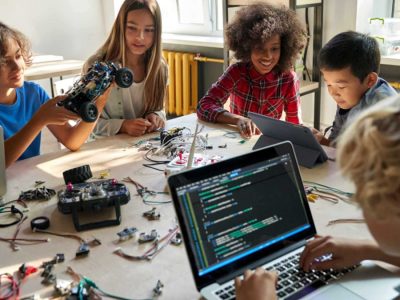
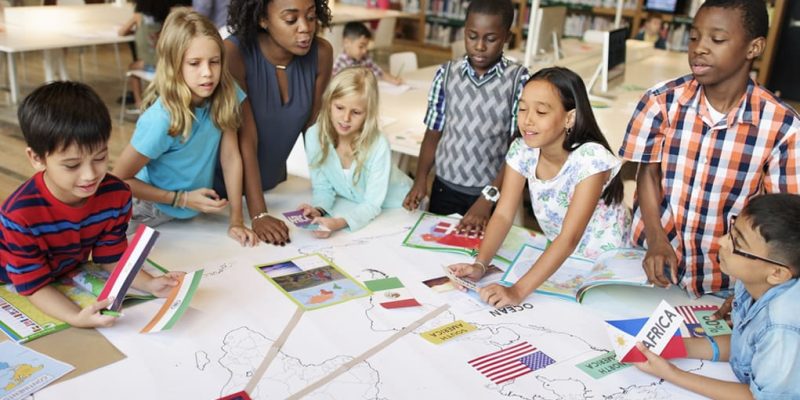
Collaborative Dynamics: In a PBL environment, students work in small teams to achieve shared objectives. They must delegate tasks based on individual strengths, negotiate differing opinions, navigate interpersonal friction, and hold one another accountable for project deliverables. These experiences build emotional intelligence, peer leadership, and collaborative communication.
-
Critical Thinking and Analytical Reasoning: PBL scenarios intentionally lack a single correct answer printed in the back of a textbook. Learners must evaluate conflicting evidence, assess potential risks, challenge underlying assumptions, and make reasoned decisions under conditions of uncertainty.
-
Time Management and Project Ownership: Executing a complex project over several weeks requires strategic planning. Students break down large goals into actionable milestones, assign internal deadlines, manage resources, and track progress using project management workflows. This fosters personal autonomy and operational discipline.
-
Adaptability and Iterative Problem-Solving: Initial plans rarely succeed without revision. When prototypes fail, data yields unexpected anomalies, or user feedback is critical, students learn to view setbacks as valuable data points rather than terminal failures. This builds psychological resilience and an iterative design mindset.
Fostering Deep Engagement Through Student Agency and Authentic Outcomes
A central pillar of Project-Based Learning is student voice and choice. Traditional education often places the teacher at the center of the learning process as the sole authority and evaluator. PBL shifts the teacher’s role to that of a facilitator, coach, and advisor, transferring primary ownership of the learning process to the students.
When learners are given the autonomy to choose their research focus, design methodologies, and presentation formats, intrinsic motivation replaces compliance-driven effort. Students are no longer completing an assignment simply to earn a grade from an instructor; they are driven by a genuine desire to solve a problem that holds personal or community relevance.
Furthermore, authentic PBL units culminate in a public exhibition, where students present their final products, research findings, or physical prototypes to an audience beyond the classroom. Presenting work to community leaders, industry experts, local business owners, or parents elevates the stakes of the learning experience. Preparing for a professional presentation requires students to refine their verbal communication, articulate their reasoning clearly, defend their methodologies, and accept constructive critique gracefully.
Preparing Learners for an Automated and AI-Driven Future
As technological advancements, automation, and artificial intelligence reshape global industries, routine cognitive tasks and basic information retrieval are increasingly performed by algorithms. The value of human labor has shifted decisively toward higher-order capabilities: creative ideation, complex ethical reasoning, emotional empathy, system design, and novel problem-solving.
Project-Based Learning directly targets these higher-order cognitive domains. By engaging students in open-ended inquiry, design thinking, and practical creation, PBL prepares individuals to thrive in an unpredictable economic landscape. Students trained in PBL frameworks do not merely adapt to existing job descriptions; they develop the entrepreneurial mindset required to identify unmet needs, invent new solutions, and navigate continuous professional transformation.
By transforming classrooms into dynamic workshops of real-world inquiry, Project-Based Learning restores purpose and vitality to the educational journey. It ensures that when students graduate, they step into the workforce not just as knowledgeable individuals, but as capable, resilient, and proactive problem solvers ready to address the challenges of tomorrow.
Frequently Asked Questions
How does Project-Based Learning differ from simply doing a project at the end of a unit?
In traditional instruction, a project is typically an assignment assigned at the conclusion of a unit to demonstrate what students have already learned through lectures and readings. In Project-Based Learning, the project is the main vehicle for learning itself. Students acquire core content, master skills, and conduct research throughout the lifecycle of the project to answer an overarching, open-ended inquiry question.
How do educators evaluate individual student performance during group-based PBL?
Teachers use multi-faceted assessment frameworks to ensure individual accountability within team environments. These include rubric-based evaluations of individual contributions, formative check-ins at key project milestones, self-reflections, peer evaluations, and individual oral defense sessions where students explain their specific technical contributions to the collective project.
Is Project-Based Learning effective for younger elementary school students?
Yes, PBL can be adapted for all age levels. For early elementary learners, projects are typically shorter in duration, feature more direct scaffolding from the teacher, and focus on immediate, tangible environments like school gardens, local animal habitats, or classroom community rules. The core principles of active investigation and student agency remain identical.
How can schools with limited technology or financial resources implement PBL?
PBL does not require expensive digital technology or high-end lab equipment. Effective projects can focus on community surveys, local environmental conservation, civic engagement, oral history collection, or designing low-tech physical solutions using recycled materials. The success of PBL depends on the depth of inquiry and real-world relevance, not the price tag of the classroom tools.
What role do industry mentors and community partners play in PBL frameworks?
Community partners and industry professionals enhance PBL by serving as subject-matter experts, project clients, or panel judges for final student presentations. Mentors provide authentic feedback, expose students to professional expectations, share industry insights, and help bridge classroom learning directly with real-world career fields.
How does PBL support neurodivergent learners and students with diverse learning needs?
PBL inherently offers multiple entry points and modes of expression. Because projects incorporate diverse tasks—such as research, graphic design, physical construction, oral presentation, and team coordination—students can leverage their unique strengths. The flexible nature of PBL allows educators to embed tailored accommodations without isolating students from core collaborative activities.
What is the biggest challenge teachers face when transitioning to Project-Based Learning?
The primary challenge for educators is shifting from a teacher-centered model of direct instruction to a student-centered model of facilitation. Teachers must learn to manage open-ended classroom dynamics, tolerate initial ambiguity as students work through problems, design rigorous interdisciplinary rubrics, and guide learning without giving away the final answers immediately.
What is your reaction?
Excited
0
Happy
0
In Love
0
Not Sure
0
Silly
0